
3min read
Notion and the Emotional Weight of an Empty Page
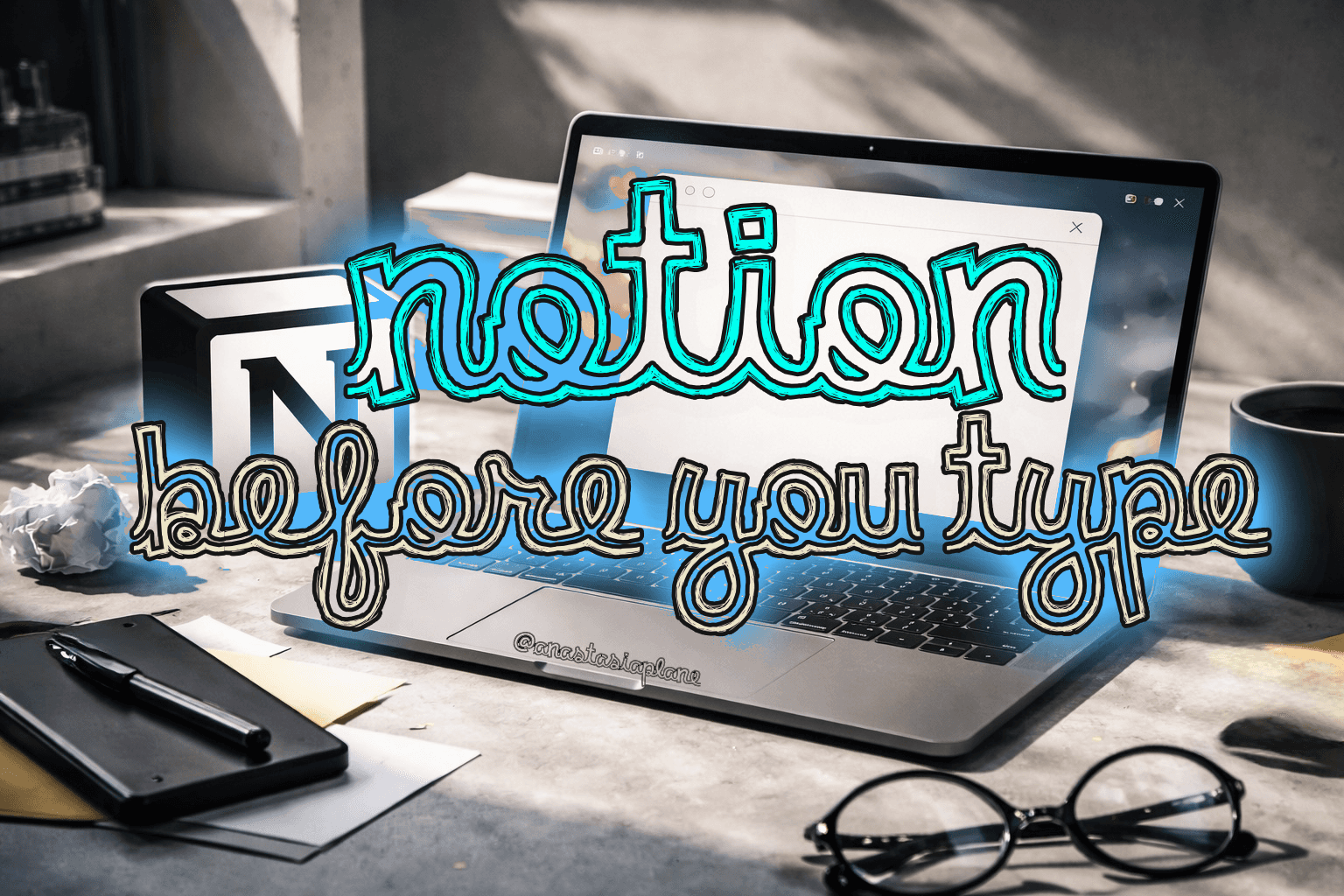
Notion Before You Type
In a world where productivity tools constantly compete by promising speed, efficiency, and optimization, Notion has chosen a much quieter way to stand out. Instead of showing dashboards, templates, or complex workflows, the brand recently leaned into something far more familiar: an empty page.
The visual is almost uncomfortable in its simplicity. A blank canvas. A blinking cursor. No instructions, no guidance, no indication of what should come next. At first glance, it feels like nothing, but for anyone who has ever used Notion, it immediately becomes something.
The execution is minimal, yet emotionally charged. The empty page doesn't tell you how to feel. It lets you decide. That feeling could be excitement, pressure, possibility, avoidance, or motivation. For many people, it is all of them at once. The power of the visual lies in that emotional ambiguity.
What makes this approach effective is that Notion isn't selling a feature or a function. It's reflecting a real moment users experience every day. The moment before you start planning. The moment before you organize your thoughts. The moment where everything is possible and nothing has happened yet.
Notion understands that productivity doesn't begin with structure. It begins with hesitation. The brand doesn't try to eliminate that tension. Instead, it acknowledges it. The blinking cursor becomes a symbol of modern work itself: open-ended, self-directed, and slightly overwhelming.
Over time, Notion has built a reputation not just as a tool, but as a thinking space. Its users don't come to Notion for answers, they come to shape their own. By centering the campaign around an empty page, the brand reinforces that identity without needing to explain it.
This is a confident move. Many brands feel pressure to demonstrate value immediately, to show outcomes and results. Notion does the opposite. It trusts that its audience already understands what that blank page represents. The absence of guidance is the message.
The campaign also stands out because it resists over-design. In an ecosystem full of productivity hacks and pre-built systems, Notion positions itself as neutral. It doesn't impose a way of working. It simply waits.
There is a broader lesson here for brands beyond software. When you truly understand your users, you don't need to over-communicate. Reflecting their lived experience can be more powerful than promising improvement. Recognition builds trust faster than instruction.
Notion's empty page is not about productivity. It's about permission, permission to start anywhere, or not start at all. By keeping the message simple and emotionally honest, Notion stays relevant without raising its voice.
Sometimes, the most effective branding doesn't tell people what to do. It shows them exactly where they already are.