2min read
Chaos of Attention
Coachella didn't start as an influencer playground.
Back in 1999, it was positioned as a more accessible way to experience live music -multiple artists, one ticket, lower overall cost than seeing them individually. Quite simple idea.
Today, it's one of the most effective marketing ecosystems in the world.
And 2026 proved that in a pretty interesting way.
In the weeks leading up to the festival, there were multiple reports of influencers getting their brand trips cancelled last minute. At the same time, attendees were dealing with Airbnb and hotel bookings falling through just days before arrival.
On paper, that's a mess.
In reality, it turned into content. :)
Millions of views on Social Media
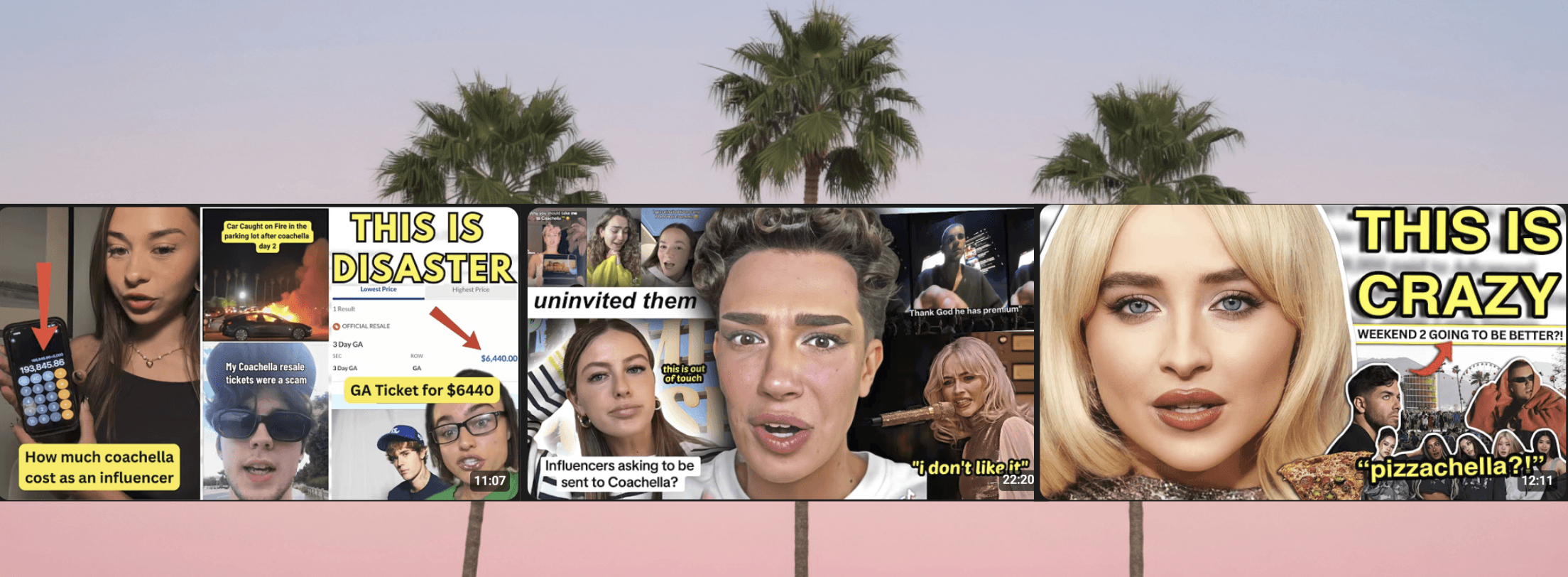
YouTube, TikToks, breakdowns, "what actually happened" posts and suddenly the conversation wasn't just about outfits and lineups, but everything around it. And instead of "hurting" Coachella, it extended its reach.
That's the part most brands still underestimate:
Coachella doesn't just create moments. It creates momentum.
Even when things go wrong.
At the same time, not every brand showing up this year got it right.
The activations that worked weren't necessarily the biggest, they were the ones that felt native to the experience. The ones people wanted to be in, not just walk past.
Because visibility isn't the challenge anymore.
Relevance is.
And audiences are getting sharper. Fast.
Overly curated influencer content started to feel predictable. Some of it even got called out. Meanwhile, more spontaneous, less polished content often performed better.. because it actually matched the energy of the festival.
So what is the takeaway if you're not running a desert festival?
A few things stand out:
Attention today isn't controlled: it's co-created
Not everything needs to be perfect to perform
Culture fit beats budget, every time
If people don't want to share it, it doesn't scale
And the strongest marketing doesn't just reach people - it pulls them in
Coachella figured this out years ago.
It stopped acting like an event, and started acting like a platform.
That's the shift.
And that's where most brands are still behind. ;)